As a psychotherapist, I’ve always been fascinated by the “masks” we wear to survive our own history. In my novella Arthur 9, I examine how a man’s coping mechanism—logic and numbers—transforms into his own cell. Arthur Penhaligon represents a study of unresolved guilt turning suburban life into a high-stakes psychological zone. These profiles offer a a “behind-the-couch” look at the clinical architecture of the man at the window and the neighbor who understands exactly how to shatter his world.
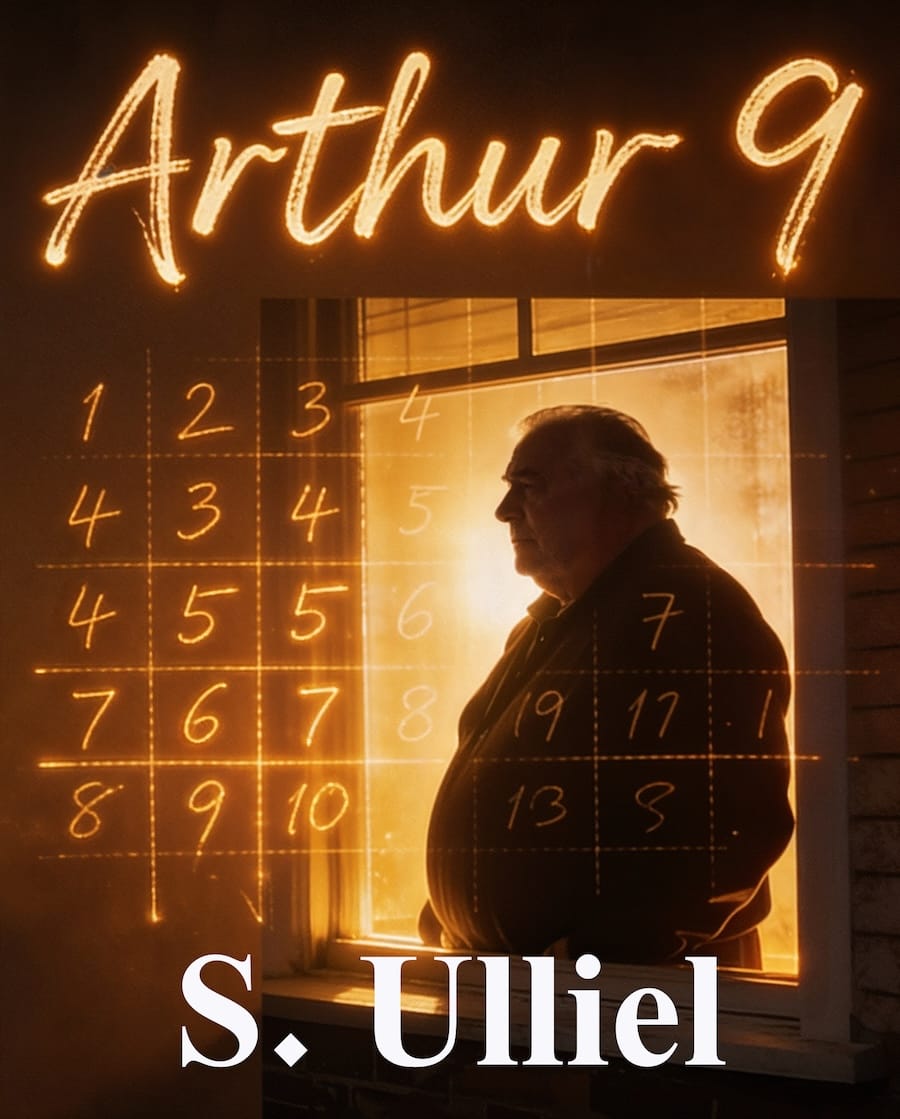
Subject: Arthur Penhaligon
Age: 65
Occupation: Accountant (Retired)
Clinical Presentation: Severe Obsessive-Compulsive Personality Disorder (OCPD) with comorbid Post-Traumatic Stress Disorder (PTSD) and emerging Paranoid Personality Disorder traits.
Executive Summary
Arthur Penhaligon presents a complex clinical picture dominated by a rigid, hyper-vigilant cognitive style rooted in catastrophic childhood trauma. His psychic economy is governed by an “Audit Defense Mechanism,” wherein the external world is reduced to quantifiable data points to mitigate the existential dread of unpredictable “impacts.” His pathology is characterized by a complete collapse of the boundary between mathematical certainty and moral agency.
I. Etiological Foundations: The 1972 Intersection
The subject’s psychic structure is anchored in a specific traumatic event from November 1972—a vehicular accident involving his sister, Claire.
- Traumatic Fixation: Penhaligon demonstrates a “stalling of time.” Despite his chronological age, he resides psychologically in the seconds preceding the 1972 impact.
- The Burden of Miscalculation: The trauma is not merely the event, but the subject’s perceived failure of forensic anticipation. He views the tragedy as a “miscalculation of force” rather than an accident, leading to a lifelong quest for a “total audit” of all variables.
- Somatic Resonance: He reports feeling the “debt” in his marrow and teeth, suggesting a profound somatic integration of guilt.
II. Psychodynamic Infrastructure
1. The Grid as a Transitional Object
Penhaligon has constructed “The Grid”—a surveillance and record-keeping system—as a defense against the entropy of the street.
- Hyper-Vigilance: He monitors mundane events (garbage pickup, mail delivery) with the intensity of a military strategist. This is a manifestation of “magical thinking,” where the act of observation is believed to prevent catastrophe.
- Numerical Reductionism: By assigning Pythagorean values to names and objects (The 11, The 9), he attempts to strip the world of its terrifying subjectivity.
2. Guilt and the “Skeletal Architecture”
The subject’s relationship with his sister is the primary source of his psychic “debit.”
- Pathological Altruism: His early retirement and self-imposed isolation serve as a form of “penance-through-surveillance.”
- The Brace as Metronome: The auditory trigger of his sister’s mechanical brace functions as a repetitive reminder of his perceived structural failure.
III. Behavioral and Cognitive Observations
| Clinical Marker | Manifestation in Subject |
|---|---|
| Rigid Verticality | A constant posture of “structural defense” against the “gravitational pull of history.” |
| Acoustic Sensitivity | Hypersensitivity to frequencies, rhythms, and “stutters” in light or sound. |
| Moralization of Numbers | Belief that “numbers remain honest” while human behavior is inherently “fraudulent.” |
| Active Mitigation | The transition from observer to intervener when a “Master Number” is perceived to breach the perimeter. |
IV. Differential Diagnosis & Risk Assessment
While Penhaligon exhibits clear OCPD traits (preoccupation with order, perfectionism, and control), his behavior is veering toward Delusional Disorder, Persecutory Type.
- Social Isolation: He has successfully deleted his own “visibility” to the point of social erasure.
- Projection: He projects the “Destroyer” archetype onto any variable that disrupts his calculated equilibrium.
- Risk of Decompensation: As the “math breaks,” the subject is prone to “uncoordinated rhythms” and “spasms of survival,” which may lead to catastrophic intervention.
V. Clinical Conclusion
Arthur Penhaligon is a man trapped in a permanent audit. He is the “Antibody” of the cul-de-sac, yet his defense mechanisms have become auto-immune—destroying the very order he seeks to preserve. His primary conflict is the realization that his role as the “Guardian” is inextricably linked to his original failure, making him the most dangerous variable in his own Grid.
Another bonus
A comparison of characters: Arthur Penhaligon vs. Blackwood